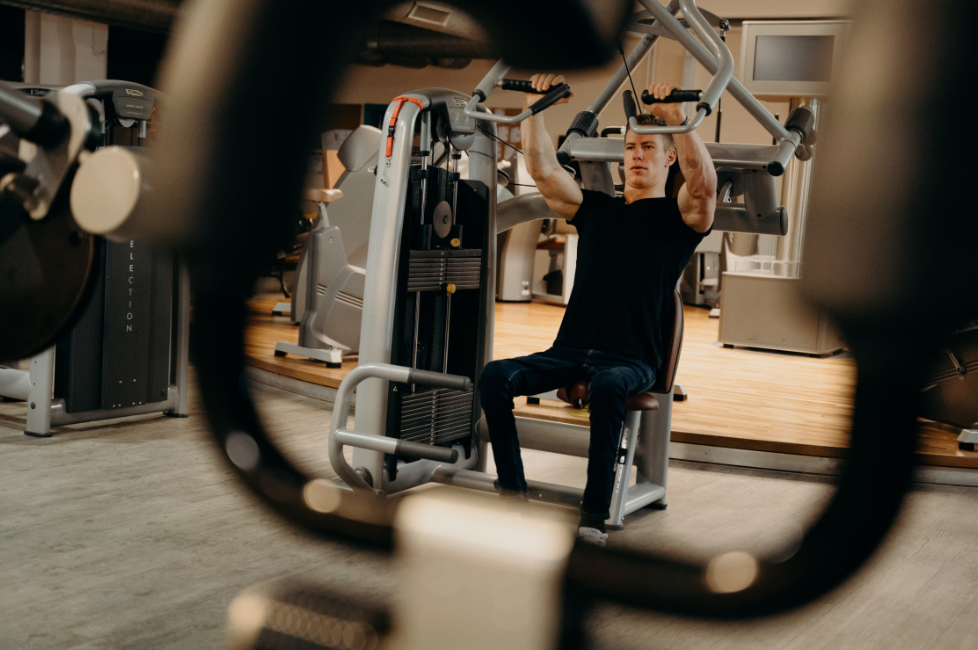
Choosing the best commercial gym equipment for personal training studios is important when building a professional fitness space. Personal training studios usually have less space than large commercial gyms. Every piece of equipment needs to provide value.
The right equipment should be durable, versatile, safe, and easy to use. It should also support different types of workouts and clients.
A personal training studio may work with beginners, athletes, older adults, and clients with different fitness goals. This means you need equipment that can support strength training, cardio, functional training, mobility, and full-body workouts.
In this guide, we will explain the best commercial gym equipment for personal training studios. We will also cover what to consider before buying equipment and how to create an efficient studio setup.
What Is a Personal Training Studio?
A personal training studio is a fitness facility that focuses mainly on one-on-one or small-group training.
Unlike a large commercial gym, a personal training studio usually has fewer machines and less unused space.
Trainers need equipment that can be used for many different exercises.
For example, one cable machine can support exercises for the upper body, lower body, and core. A power rack can also be used for squats, presses, pulls, and other strength exercises.
This makes multifunctional equipment especially valuable in a personal training studio.
What Makes Commercial Gym Equipment Good for Personal Training?
Commercial equipment needs to handle frequent use.
A personal training studio may have multiple clients using the same equipment throughout the day.
The equipment should therefore have a strong frame and reliable components.
It should also be easy to adjust between clients.
Other important factors include:
- Durability
- Safety
- Versatility
- Space efficiency
- Easy maintenance
- User comfort
- Warranty coverage
- Replacement parts
The best equipment is not necessarily the equipment with the most features.
Instead, look for equipment that trainers can use regularly and efficiently.
Best Commercial Gym Equipment for Personal Training Studios
1. Functional Trainer
A functional trainer is one of the most useful pieces of equipment for a personal training studio.
It usually includes two adjustable cable columns. Some models also include a pull-up bar and other attachments.
A trainer can use it for exercises such as cable rows, chest presses, triceps pushdowns, biceps curls, lateral raises, squats, and core exercises.
Because one machine can support many movements, it is ideal for studios with limited space.
A commercial-grade functional trainer can also withstand frequent daily use.
2. Power Rack
A power rack is another excellent investment.
It provides a safe and versatile setup for strength training.
Trainers can use a power rack for squats, bench presses, overhead presses, rack pulls, and other barbell exercises.
Look for a commercial rack with a strong steel frame and adjustable safety systems.
If studio space is limited, consider a compact rack or half rack.
3. Adjustable Bench
An adjustable weight bench is essential for many strength exercises.
A good commercial bench should feel stable during heavy training.
An adjustable design allows users to perform flat, incline, and other pressing movements.
The bench can also be used with dumbbells, barbells, and cable machines.
For a personal training studio, choose a bench that is easy to adjust and move.
4. Dumbbells
Dumbbells are basic but extremely useful.
They can support hundreds of exercises.
Trainers can use them for presses, rows, squats, lunges, curls, shoulder exercises, and many other movements.
A studio does not necessarily need a huge dumbbell collection.
A well-planned range of weights can provide enough options for most clients.
Adjustable dumbbells can also save space, but commercial studios may prefer fixed dumbbells because they are quick to change between exercises.
5. Kettlebells
Kettlebells are excellent for functional training.
They can be used for swings, goblet squats, carries, presses, rows, and other exercises.
They are also useful for conditioning workouts.
Because kettlebells are relatively compact, they are a good choice for personal training studios.
A selection of different weights allows trainers to adapt exercises for beginners and advanced clients.
6. Barbells and Weight Plates
Barbells are important for strength-focused studios.
A commercial studio can use barbells for squats, deadlifts, bench presses, rows, and other compound exercises.
Olympic barbells are particularly useful if the studio provides serious strength training.
Weight plates should also be durable and easy to handle.
Bumper plates can be useful for functional and Olympic-style training, while iron plates can work well for traditional strength training.
7. Cable Crossover
A cable crossover can provide a wide range of upper-body and full-body exercises.
It can be used for cable flyes, rows, presses, curls, triceps exercises, and many core movements.
Some cable crossover machines are large, so measure your studio before purchasing one.
If space is limited, a functional trainer may provide similar versatility in a smaller footprint.
8. Cardio Equipment
A personal training studio does not always need many cardio machines.
One or two versatile options may be enough.
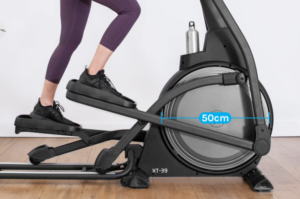
Popular choices include treadmills, rowing machines, air bikes, ellipticals, and stationary bikes.
The best cardio equipment depends on the type of training offered by the studio.
For example, a studio focused on high-intensity conditioning may prefer air bikes and rowers.
A studio focused on general fitness may benefit from a treadmill or stationary bike.
9. Rowing Machine
A commercial rowing machine can provide a full-body cardio workout.
Rowing involves the legs, core, and upper body.
It can also be used for interval training.
Rowers are usually relatively compact compared with many large cardio machines.
Some models can also be stored vertically when not in use.
10. Air Bike
An air bike is useful for conditioning and high-intensity interval training.
The resistance increases as the user pedals and moves the handles harder.
This makes the machine suitable for different fitness levels.
Personal trainers can use air bikes for warm-ups, conditioning sessions, interval training, and finishers.
11. Sled and Sled Track
A sled can provide excellent functional strength and conditioning exercises.
Clients can push or pull the sled to train the legs and cardiovascular system.
However, you need enough floor space for sled training.
If the studio has an appropriate turf area, a sled can be a valuable addition.
12. Resistance Bands
Resistance bands are inexpensive and require very little storage space.
They can be used for warm-ups, mobility exercises, strength training, and rehabilitation-style movements.
Bands are also useful when trainers need to quickly modify an exercise.
A variety of resistance levels can support different clients.
13. Medicine Balls
Medicine balls are useful for functional training and conditioning.
They can be used for throws, slams, rotational exercises, squats, lunges, and core movements.
They are especially useful for small-group training.
A wall-mounted or vertical storage rack can help keep medicine balls organized.
14. Plyometric Box
A plyometric box can support many exercises.
It can be used for step-ups, box squats, jumps, and other movements.
Choose a commercial box with a stable construction and non-slip surface.
If multiple trainers work in the same space, several box heights can make programming easier.
15. Suspension Trainer
A suspension trainer takes up very little space.
It can be attached to a suitable anchor point and used for rows, squats, lunges, presses, and core exercises.
It is particularly useful for functional training.
Suspension training can also be easily adapted for different fitness levels.
Best Equipment for a Small Personal Training Studio
Space is one of the biggest challenges for a small studio.
You should prioritize multifunctional equipment.
A compact setup might include a functional trainer, adjustable bench, dumbbells, kettlebells, barbells, weight plates, resistance bands, medicine balls, and one or two cardio machines.
Storage is also important.
Wall-mounted storage can keep equipment off the floor.
Vertical racks can also reduce the amount of floor space used by weights and accessories.
The goal is to maximize usable training space.
Best Equipment for a Large Personal Training Studio
A larger studio gives you more flexibility.
You can create separate training zones.
For example, one area can be dedicated to strength training. Another can be used for cardio and conditioning.
A functional training area can include turf, sleds, medicine balls, kettlebells, and plyometric boxes.
You can also add multiple power racks, cable machines, benches, and cardio machines.
However, avoid buying equipment simply because you have the space.
Every machine should have a purpose.
How to Choose Commercial Gym Equipment for a Personal Training Studio
Consider Your Clients
Think about who you train.
Do you mainly work with beginners?
Do you train athletes?
Do you provide weight-loss programs?
Do you focus on strength training?
Your client base should influence your equipment choices.
Measure Your Space
Measure the entire studio before ordering equipment.
Consider the footprint of each machine.
Also consider the space needed to use the machine safely.
For example, a cable machine may have a relatively small footprint but still require additional space around it.
Prioritize Versatility
Multifunctional equipment is extremely valuable in a personal training studio.
A single machine that supports dozens of exercises can be more useful than several machines that perform only one or two movements.
This can also reduce equipment costs.
Choose Commercial-Grade Construction
Personal training studios typically use equipment more frequently than home gyms.
Commercial-grade construction is therefore important.
Look for strong frames, quality cables, reliable pulleys, durable upholstery, and high-quality adjustment mechanisms.
Check Weight Capacity
Weight capacity is particularly important for strength equipment.
Check the manufacturer’s specifications.
Make sure the equipment can safely handle the loads expected in your studio.
Look at Warranty and Service
A broken machine can interrupt training sessions.
Before buying, check the warranty.
Also find out whether replacement parts are available.
Good customer service and local repair support can be very valuable for a commercial studio.
How Much Commercial Gym Equipment Does a Personal Training Studio Need?
There is no fixed number.
The amount depends on the studio size, number of trainers, number of clients, and training style.
A small studio may be able to operate effectively with a relatively small equipment selection.
The key is to choose versatile equipment.
For example, a functional trainer, power rack, adjustable bench, dumbbells, kettlebells, and resistance bands can support a wide variety of workouts.
As the business grows, you can add equipment based on client demand.
How to Save Money When Buying Commercial Gym Equipment
You do not need to buy everything at once.
Start with the equipment that directly supports your main services.
Buy high-quality equipment for the pieces that receive the most use.
You can also compare new and used commercial equipment.
Used commercial equipment can sometimes provide good value when it is properly inspected.
However, check the condition of frames, cables, bearings, upholstery, electronics, and adjustment mechanisms before buying.
New vs. Used Commercial Gym Equipment
Both options have advantages.
New equipment usually provides a full warranty and the latest features.
Used equipment can reduce the initial investment.
If buying used equipment, inspect it carefully.
Look for rust, cracks, damaged cables, worn bearings, torn upholstery, and missing parts.
For electronic equipment, test the display, controls, motor, and other functions.
The right choice depends on your budget and risk tolerance.
How to Arrange Equipment in a Personal Training Studio
Good layout can make a small studio feel much larger.
Keep high-use equipment easy to access.
Place strength equipment where there is enough room for safe movement.
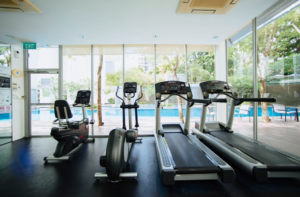
Keep cardio equipment in an area where clients can exercise without interfering with strength training.
Storage should be easy to reach.
Avoid creating narrow walkways between machines.
You should also leave enough open floor space for warm-ups, mobility work, stretching, and functional exercises.
FAQ
What is the best commercial gym equipment for personal training studios?
Functional trainers, power racks, adjustable benches, dumbbells, kettlebells, barbells, weight plates, resistance bands, medicine balls, and selected cardio equipment are among the most useful options. The best combination depends on the studio’s size and training style.
What equipment does a personal trainer need?
A personal trainer can start with versatile equipment such as dumbbells, kettlebells, resistance bands, an adjustable bench, medicine balls, and a functional trainer. A power rack and barbells can be added for strength-focused training.
What is the most versatile piece of gym equipment?
A functional trainer is one of the most versatile commercial gym machines. It can support many upper-body, lower-body, and core exercises while using relatively little floor space compared with having many individual machines.
How much space do you need for a personal training studio?
The required space depends on the number of clients, trainers, and equipment. A small studio can operate in a relatively compact area if the equipment is carefully selected. You should also leave enough open space for safe movement and functional training.
Is commercial gym equipment worth it for a personal training studio?
Yes. Commercial equipment can be a good investment because personal training studios often use equipment frequently. Durable construction can help reduce downtime and replacement costs over the long term.
Should a personal training studio buy used gym equipment?
Used commercial equipment can be a cost-effective option if it is in good condition. Inspect the frame, cables, pulleys, bearings, upholstery, electronics, and other important components before buying.
What cardio equipment is best for a personal training studio?
The best cardio equipment depends on your training programs. Treadmills, rowing machines, air bikes, ellipticals, and stationary bikes can all be useful. Smaller studios should choose cardio machines that match their most common client needs.
How can I save space in a personal training studio?
Choose multifunctional equipment and use vertical or wall-mounted storage. Functional trainers, adjustable benches, adjustable dumbbells, kettlebells, resistance bands, and compact cardio machines can help maximize the available space.
Conclusion
Choosing the best commercial gym equipment for personal training studios requires more than simply buying high-end machines.
The equipment needs to match your clients, training programs, available space, and budget.
Multifunctional equipment is often the best choice for a personal training studio. A functional trainer, power rack, adjustable bench, free weights, kettlebells, resistance bands, and selected cardio equipment can support a wide range of workouts.
Durability is also important. Commercial equipment should be able to handle frequent use and provide reliable performance.
Before buying, measure your space, compare equipment specifications, check warranties, and consider long-term maintenance.
A well-planned equipment setup can help you create a professional studio while making better use of every square foot.