Starting a new fitness routine can feel difficult, especially if you are not used to exercising regularly. The good news is that you do not need an expensive gym membership or complicated equipment to begin. A simple home workout routine for beginners female can help you build strength, improve mobility, and become more comfortable with exercise. The key is to start slowly, choose exercises you can manage, and create a routine that fits your everyday life.
Why Start Working Out at Home?
Home workouts are convenient for beginners. You can exercise without traveling to a gym or worrying about other people watching you. Even a small space in your bedroom, living room, or backyard can be enough.
Working out at home also makes it easier to stay consistent. You can choose your own schedule and adjust the workout when you are busy.
For beginners, consistency matters more than doing an extremely difficult workout. A 20- or 30-minute session that you repeat regularly can be more useful than an intense workout that you quickly give up.
How Often Should a Beginner Woman Work Out?
If you are new to exercise, starting with three workout days per week is a practical approach. You can leave a rest day between strength-focused sessions to give your body time to recover.
For example, you could exercise on Monday, Wednesday, and Friday. On the other days, you might take a short walk, stretch, or simply rest.
As your fitness improves, you can gradually increase the length or difficulty of your workouts. There is no need to rush.
A Simple Home Workout Routine for Beginners Female
This beginner routine uses bodyweight exercises, so you do not need special equipment. Before starting, spend about five minutes warming up.
1. Bodyweight Squats
Stand with your feet around shoulder-width apart. Keep your chest lifted and slowly bend your knees as if you were sitting in a chair.
Push through your feet to return to the standing position.
Start with 8 to 12 repetitions.
Squats work several muscles in your lower body, including the thighs and glutes. They are also useful for developing basic movement strength.
2. Glute Bridges
Lie on your back with your knees bent and your feet flat on the floor.
Tighten your abdominal muscles and squeeze your glutes as you raise your hips. Pause briefly at the top, then lower your hips slowly.
Try 10 to 15 repetitions.
This exercise is beginner-friendly and does not require much space.
3. Wall Push-Ups
Traditional push-ups can be challenging when you are just starting. Wall push-ups provide an easier alternative.
Stand facing a wall and place your hands against it. Bend your elbows to bring your upper body toward the wall. Then push yourself back.
Perform 8 to 12 repetitions.
As you become stronger, you can move to an elevated push-up using a sturdy surface and eventually try modified floor push-ups.
4. Bird Dog
Start on your hands and knees. Keep your back in a comfortable neutral position.
Slowly extend one arm and the opposite leg. Hold for a moment, then return to the starting position. Switch sides.
Try 6 to 10 repetitions on each side.
Bird dogs can help beginners practice balance and controlled movement while working the core and other supporting muscles.
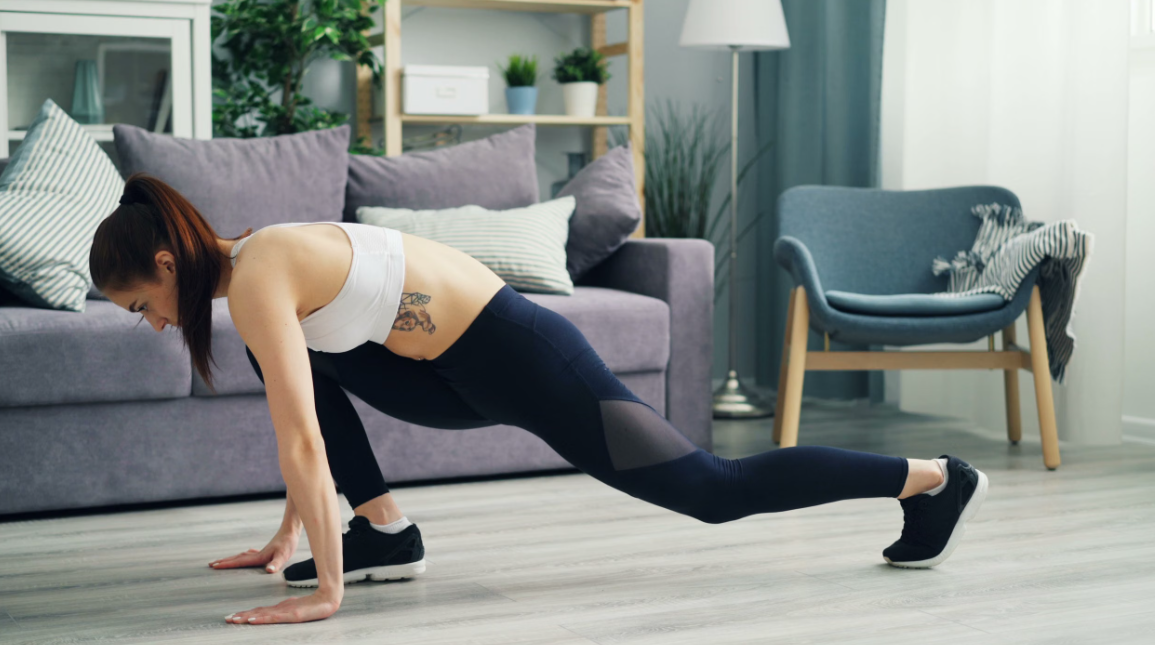
5. Reverse Lunges
Stand upright with your feet together. Step one foot backward and bend both knees comfortably. Push through your front foot to return to the starting position.
Alternate legs.
Begin with 6 to 10 repetitions per side.
If lunges feel unstable, hold onto a sturdy chair for balance.
6. Standing Knee Raises
Stand tall with your feet about hip-width apart. Lift one knee toward your waist and lower it with control. Repeat on the other side.
Continue for 30 to 45 seconds.
This simple movement can add a little more activity to your workout without requiring jumping or running.
7. Plank
A plank does not need to last several minutes to be useful.
Start with a short hold of around 15 to 20 seconds. Keep your body controlled and avoid letting your lower back sag.
If a standard plank is too difficult, place your knees on the floor.
Gradually increase the holding time as you become more comfortable.
Beginner Weekly Workout Schedule
You can organize these exercises into a simple weekly plan.
Monday: Full-body workout
Tuesday: Light walking or stretching
Wednesday: Full-body workout
Thursday: Rest or gentle movement
Friday: Full-body workout
Saturday: Walking, cycling, or another enjoyable activity
Sunday: Rest
During your full-body sessions, perform the exercises at a comfortable pace. You can start with one set of each exercise and gradually work toward two or three sets.
How Long Should a Home Workout Last?
A beginner does not need to spend an hour exercising.
A 20- to 30-minute session can be enough when you are building the habit. Your workout can include a short warm-up, several strength exercises, and a few minutes of gentle movement afterward.
The goal is to create a routine you can maintain.
If you only have 15 minutes on a busy day, a shorter workout is still better than abandoning your routine completely.
Should Women Use Weights for Home Workouts?
You can begin without weights, especially if you are unfamiliar with strength training. Bodyweight exercises can help you learn basic movement patterns first.
Later, you may want to add resistance bands, dumbbells, or other home fitness equipment.
Adding resistance can make familiar exercises more challenging. For example, you could eventually perform goblet squats with a dumbbell or use resistance bands for lower-body exercises.
The important point is to increase resistance gradually rather than choosing a weight that makes good form difficult.
Common Beginner Mistakes to Avoid
One common mistake is trying to do too much during the first week. Feeling motivated is great, but your body still needs time to adapt.
Another mistake is copying advanced workouts from social media. A workout that works for an experienced athlete may be too demanding for someone who is just beginning.
Poor exercise form is another issue. Slow, controlled movements are usually a better starting point than rushing through a large number of repetitions.
Finally, do not judge your progress only by the number on the scale. Strength, endurance, mobility, energy, and consistency are also meaningful signs of progress.
How to Stay Consistent With Home Workouts
The easiest workout to maintain is one that fits naturally into your lifestyle.
Choose a time when you are normally available. Some people prefer exercising in the morning, while others find it easier after work.
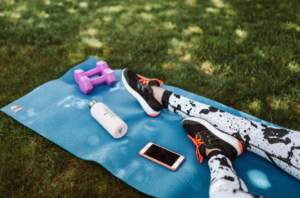
You can also prepare your workout space ahead of time. Keep a yoga mat, resistance band, or pair of light dumbbells somewhere convenient if you use them.
Most importantly, avoid making every workout feel like a test. Some days will be easier than others. What matters is continuing to move forward.
When Should You Increase the Difficulty?
After several weeks, your current workout may begin to feel easier. That is a good time to make a small adjustment.
You could add a few repetitions, perform another set, increase your exercise time, or introduce light resistance.
Try changing only one or two things at a time. This makes it easier to understand how your body responds.
Progress does not have to be dramatic. Small improvements repeated over time can create a meaningful difference.
Final Thoughts
A home workout routine for beginners female does not have to be complicated. Squats, glute bridges, wall push-ups, lunges, bird dogs, and planks can provide a useful starting point without requiring a gym.
Begin with manageable workouts and focus on learning proper movement. Give yourself enough recovery time and increase the challenge gradually.
The best routine is not necessarily the hardest one. It is the routine you can realistically follow week after week.
Also Read:
Fitness Tips for Beginners: A Complete Guide to Starting Your Fitness Journey
Fitness Tips at Home Without Equipment
FAQ
What is the best home workout for a beginner woman?
A beginner-friendly routine can combine squats, glute bridges, wall push-ups, lunges, bird dogs, and planks. These movements train different areas of the body without requiring advanced equipment.
How many days a week should a beginner woman exercise?
Three workout days per week can be a reasonable starting point. You can add light walking or stretching on other days if it feels comfortable.
Can I get fit by working out at home?
Yes. Regular home workouts can improve strength, endurance, mobility, and general fitness. Your results will depend on factors such as consistency, workout difficulty, nutrition, sleep, and recovery.
Can beginners lose weight with home workouts?
Home workouts can contribute to weight management by increasing physical activity and helping build muscle. However, weight change is influenced by overall calorie intake, activity, sleep, and other lifestyle factors.
What equipment does a beginner need for home workouts?
You may not need any equipment at first. A comfortable exercise mat can be useful, while resistance bands or dumbbells can be added later as your strength improves.