Finding the best exercise for overall health at home is a great way to improve your fitness, build strength, support heart health, and maintain a healthy lifestyle without needing a gym membership. Home workouts are convenient, affordable, and suitable for people of all fitness levels. Whether you are a beginner starting your fitness journey or someone looking for simple daily exercises, many effective movements can help improve your physical and mental health. The best approach is choosing exercises that train your whole body, are easy to perform consistently, and match your personal fitness goals.
Best Exercise for Overall Health at Home Without Equipment
You do not need expensive machines or gym equipment to improve your overall health. Bodyweight exercises can provide excellent benefits by improving muscle strength, flexibility, balance, endurance, and cardiovascular fitness.
Here are some of the best exercises you can do at home without equipment:
1. Walking or Marching in Place
Walking is one of the simplest and most effective exercises for overall health. If you have limited space, marching in place is a great alternative.
Benefits include:
- Improves heart health
- Supports weight management
- Increases daily activity levels
- Helps reduce stress
- Improves circulation
For beginners, start with 10 to 20 minutes per day and gradually increase your time.
2. Squats
Squats are one of the best full-body movements because they strengthen multiple muscle groups, including your legs, hips, and core.
Benefits of squats:
- Builds lower-body strength
- Improves balance and mobility
- Supports healthy aging
- Helps increase daily movement ability
To perform a basic squat:
- Stand with your feet shoulder-width apart.
- Keep your chest up and back straight.
- Lower your hips as if sitting into a chair.
- Push through your feet to return to standing.
Start with 10 to 15 repetitions and increase gradually.
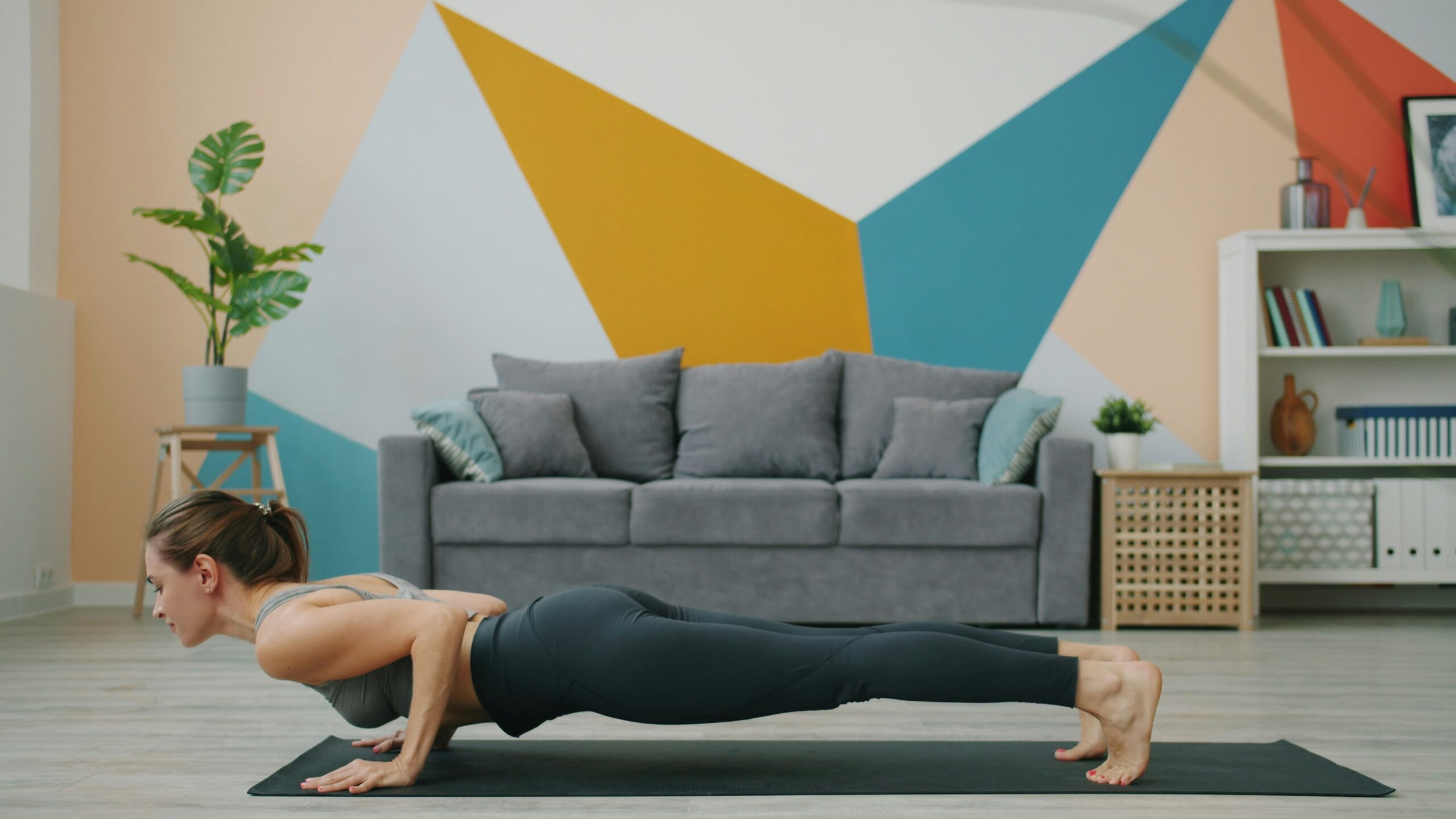
3. Push-Ups
Push-ups are an effective upper-body exercise that strengthens your chest, shoulders, arms, and core.
If traditional push-ups are difficult, beginners can start with:
- Wall push-ups
- Incline push-ups using a table
- Knee push-ups
Push-ups help improve muscle strength and support better posture.
4. Planks
Planks are one of the best exercises for building core strength without equipment.
A strong core helps with:
- Better posture
- Improved balance
- Reduced risk of back discomfort
- Better performance in daily activities
Beginners can start by holding a plank for 15 to 30 seconds and gradually increase the duration.
5. Lunges
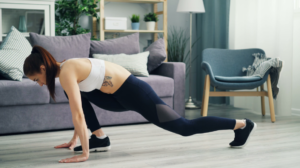
Lunges help strengthen your legs, hips, and improve balance.
Benefits include:
- Stronger lower body
- Better coordination
- Improved flexibility
- Increased stability
You can perform forward lunges, reverse lunges, or walking lunges at home.
6. Jumping Jacks
Jumping jacks are a simple cardio exercise that increases your heart rate quickly.
They can help:
- Improve cardiovascular fitness
- Burn calories
- Increase energy levels
- Improve coordination
If jumping is uncomfortable, try step jacks instead.
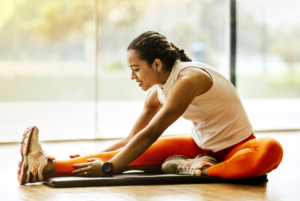
7. Yoga and Stretching
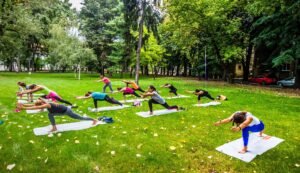
Yoga is an excellent exercise for overall health because it combines movement, flexibility, breathing, and relaxation.
Regular yoga practice may help:
- Reduce stress
- Improve flexibility
- Support joint health
- Improve balance
Adding a few minutes of stretching after workouts can also improve recovery.
Best Exercise for Overall Health at Home for Beginners
For beginners, the best exercise routine is one that is simple, safe, and easy to maintain. Starting with basic movements can help build confidence and create a long-term fitness habit.
A beginner-friendly home workout plan could include:
Warm-up (5 minutes)
- Marching in place
- Arm circles
- Gentle stretching
Main workout (20 minutes)
- 10 squats
- 10 wall or knee push-ups
- 20-second plank
- 10 lunges per leg
- 30 seconds of jumping jacks
Repeat the routine 2 to 3 times depending on your fitness level.
Cool-down (5 minutes)
- Deep breathing
- Gentle stretching
- Relaxation movements
Beginners should focus on consistency rather than intensity. Exercising for 20 to 30 minutes several times per week can create meaningful health improvements.
How Often Should You Exercise at Home?
For overall health, many adults benefit from:
- Strength training exercises at least 2 days per week
- Moderate aerobic activity throughout the week
- Daily movement whenever possible
The most important factor is consistency. A simple workout you can continue doing is better than an intense routine that you stop after a short time.
Also Read: Wellness Tips of the Day: 6 Unique Habits to Try Today
FAQ
What’s the most effective exercise for overall health?
The most effective exercise for overall health is a combination of strength training, cardiovascular exercise, flexibility training, and balance exercises. Activities like walking, squats, push-ups, and yoga provide benefits for your heart, muscles, mobility, and mental health.
There is no single perfect exercise for everyone. The best exercise is one that you enjoy and can perform consistently.
Which exercise is best for full-body at home?
Full-body exercises such as squats, push-ups, lunges, planks, and burpees are some of the best options for home workouts. These movements train multiple muscle groups at the same time and improve strength, endurance, and coordination.
A simple full-body routine can include:
- Squats
- Push-ups
- Lunges
- Planks
- Jumping jacks
What is the 3-3-3 rule for exercising?
The 3-3-3 exercise rule can have different meanings depending on the fitness program. A common version refers to completing:
- 3 exercises
- 3 rounds
- 3 repetitions or time-based intervals
The idea is to create a simple workout structure that is easy to follow. However, exercise plans should be adjusted based on your fitness level and goals.
What are five exercises I can do every day at home?
Five simple exercises you can do every day include:
- Walking or marching in place
- Squats
- Push-ups
- Planks
- Stretching
These exercises support strength, mobility, and overall fitness.
What are 7 exercises I can do every day without equipment?
Seven effective exercises without equipment include:
- Squats
- Push-ups
- Lunges
- Planks
- Mountain climbers
- Jumping jacks
- Yoga stretches
These movements can create a balanced home workout routine.
What type of exercise is most effective for longevity?
Exercises that support longevity usually include a combination of:
- Strength training to maintain muscle mass
- Walking and cardio for heart health
- Balance exercises to prevent falls
- Flexibility training for mobility
Maintaining muscle strength and staying active are especially important as people age.
What exercise takes 20 years off your life?
No exercise can literally remove 20 years from your age, but regular physical activity can help you stay healthier and function like a younger person. Activities such as strength training, walking, cycling, swimming, and high-quality cardio workouts are associated with better health and improved quality of life.
Which exercise is most anti-aging?
Strength training is often considered one of the most important anti-aging exercises because it helps preserve muscle, bone strength, and independence as you get older.
Combining strength exercises with walking, mobility training, and balance exercises can provide powerful long-term health benefits.
Also Read: Wellness Tips for Employees: 5 Simple Habits That Boost Health and Productivity
Conclusion
The best exercise for overall health at home is not about doing the hardest workout. It is about choosing movements that improve your strength, endurance, flexibility, and overall wellness while fitting into your daily life. Exercises like squats, push-ups, planks, walking, lunges, and yoga can help you build a healthier body without any equipment.
For beginners, start slowly and focus on creating a consistent habit. Even 20 to 30 minutes of regular home exercise can improve your energy, fitness level, and long-term health. The key to success is choosing exercises you enjoy and making movement a natural part of your lifestyle.